
When Your Caravan Cannot Go Where You Want To Go
There is a trip you want to do. A route through the Kalahari, a remote bush camp only accessible on a sandy two-track, a stretch of corrugations that would shake a trailer to pieces, a campsite where towing anything larger than a bakkie simply is not an option. You have been planning it for a while. The only problem is the caravan sitting in your driveway.
This is a situation more caravan owners encounter than most manufacturers care to acknowledge.
A Caravan Is One Unit
Here is the structural reality. A caravan is a single, permanent assembly: the living space and the rolling chassis are one thing. The bed, the kitchen, the gas system, the water tanks and plumbing, the shower, the electrical installation. None of it can be separated from the wheels and axles it sits on.
When the road ahead is not suitable for a caravan, the whole thing stays. You cannot take the important parts with you and leave the rest at home. There is no “I will just bring the kitchen and the bed and leave the chassis at a safe spot.” The caravan comes, or the caravan does not come. Those are the only two options.
This is not a design flaw. It is simply the nature of what a caravan is. The problem arises when the destination requires something different.
What the AHA Transformer Does Instead
The AHA Transformer is built around a different principle. The living unit is a separate structure from whatever base it sits on: the full interior, with kitchen, bed, shower, gas, water, and electrical system intact.
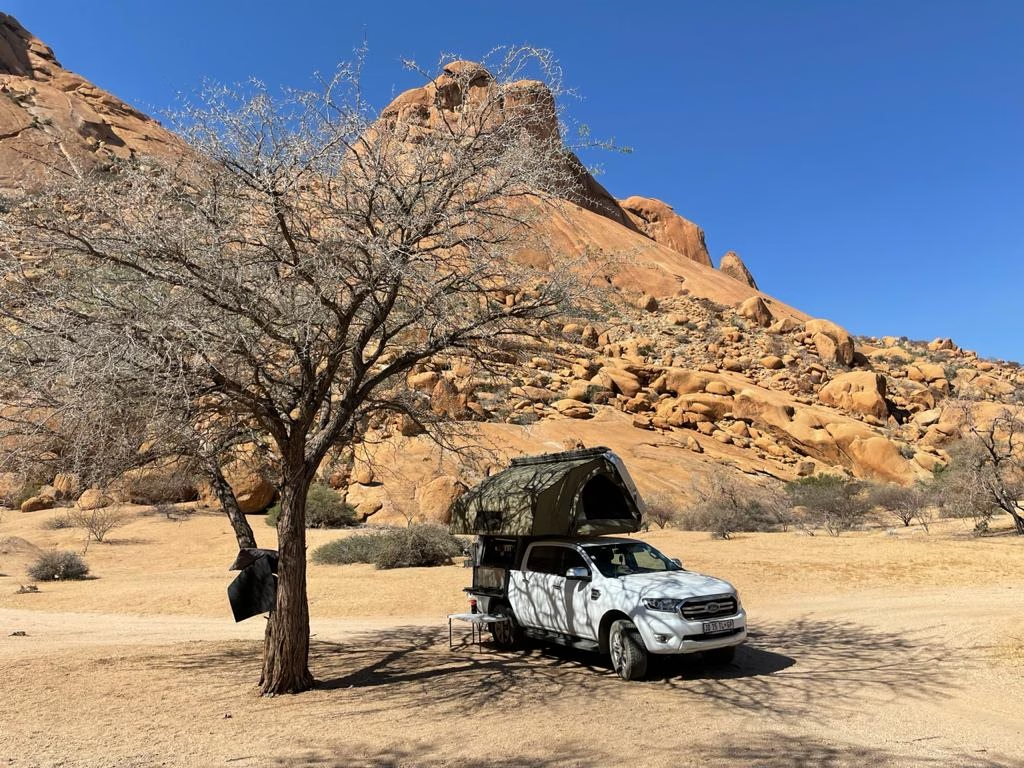
When you own an A/T Trailer, the Transformer sits on the trailer for extended trips, base camps, and any situation where the trailer makes sense. When the road ahead changes that calculation, you slide the unit off the trailer, load it onto the bakkie, and drive.
Everything comes with you. The same kitchen. The same bed. The same shower and running water. The same gas bottles and electrical setup. Nothing is stripped back or left behind. The trailer stays at home, in storage, or at the last accessible campsite, and you continue the trip in the bakkie with the full living unit on the load bed.
What This Opens Up
The practical difference is significant.
Sandy tracks that would bog down a trailer in fesh-fesh, the ultra-fine desert dust that builds up on remote Kalahari roads, are straightforward in a bakkie. Bush camps with no tow-in access become accessible. Multi-day 4x4 trails where a trailer is a liability from the first gate become viable. If you want to spend three nights at a remote waterhole and then drive back to a lodge for a night, you simply do that.
The caravan owner in the same situation has two choices: take the caravan and limit where the trip can go, or leave the caravan behind and sleep in a tent.
One Product, Not Two
The point is not that the AHA Transformer is better for rough terrain. The point is that you never have to choose between comfort and access.
A caravan owner who wants what the Transformer offers needs to buy a second product. An AHA Transformer owner who hits a route a caravan could not do slides the unit onto the bakkie and keeps going.
That is the same living unit. The same bed, the same shower, the same everything, on a road the caravan never could have taken.
Come and see how the swap works in person. Watch It Set Up at the Factory. Dawie demonstrates the full process, including how the unit moves between the trailer and the bakkie, so you can see exactly what it means for the trips you are planning.