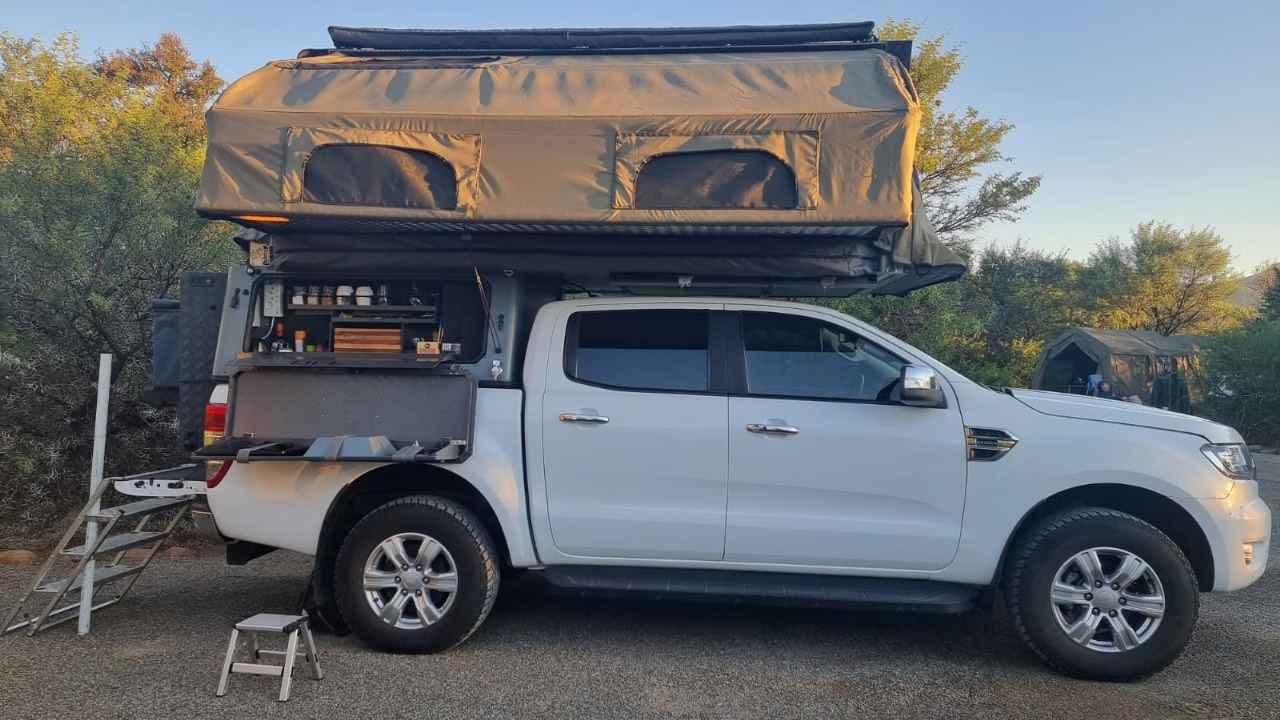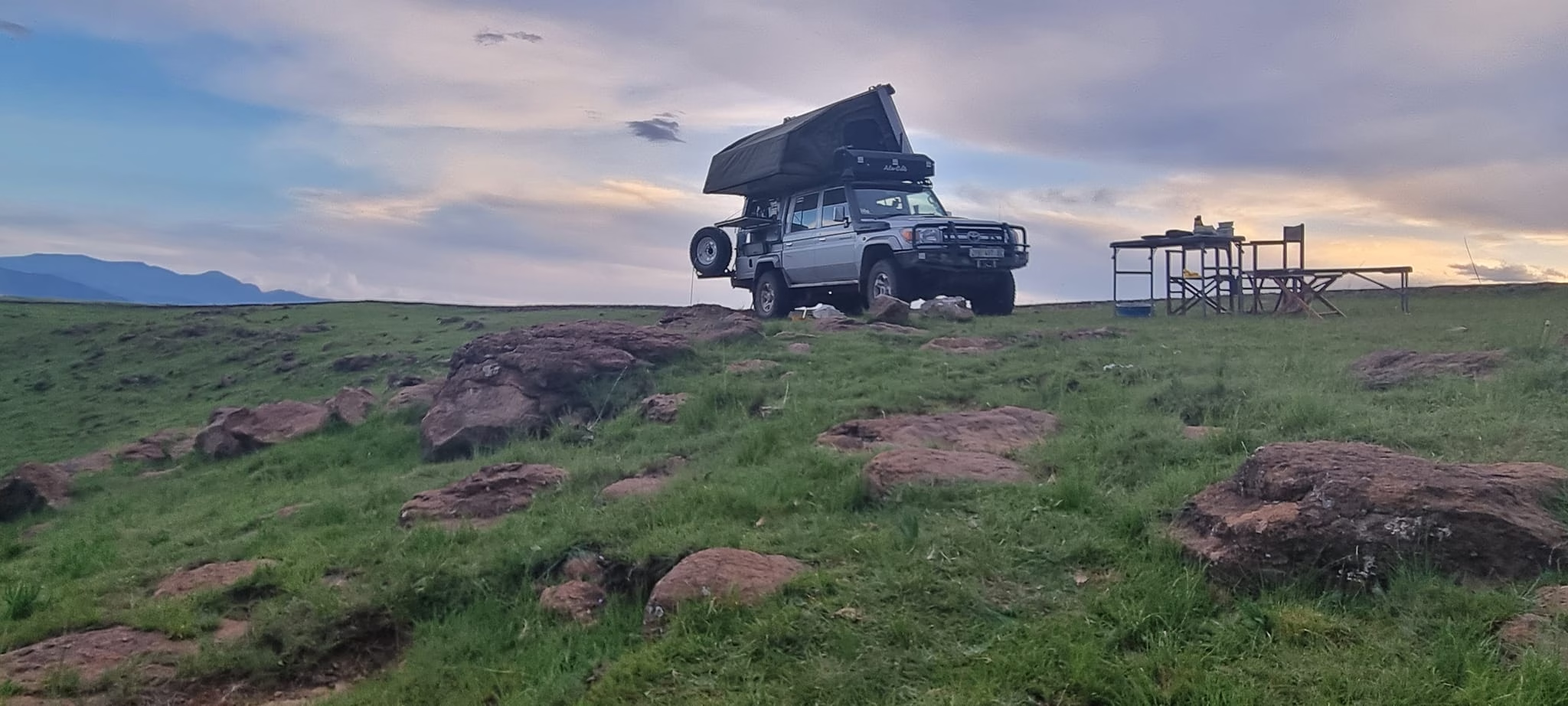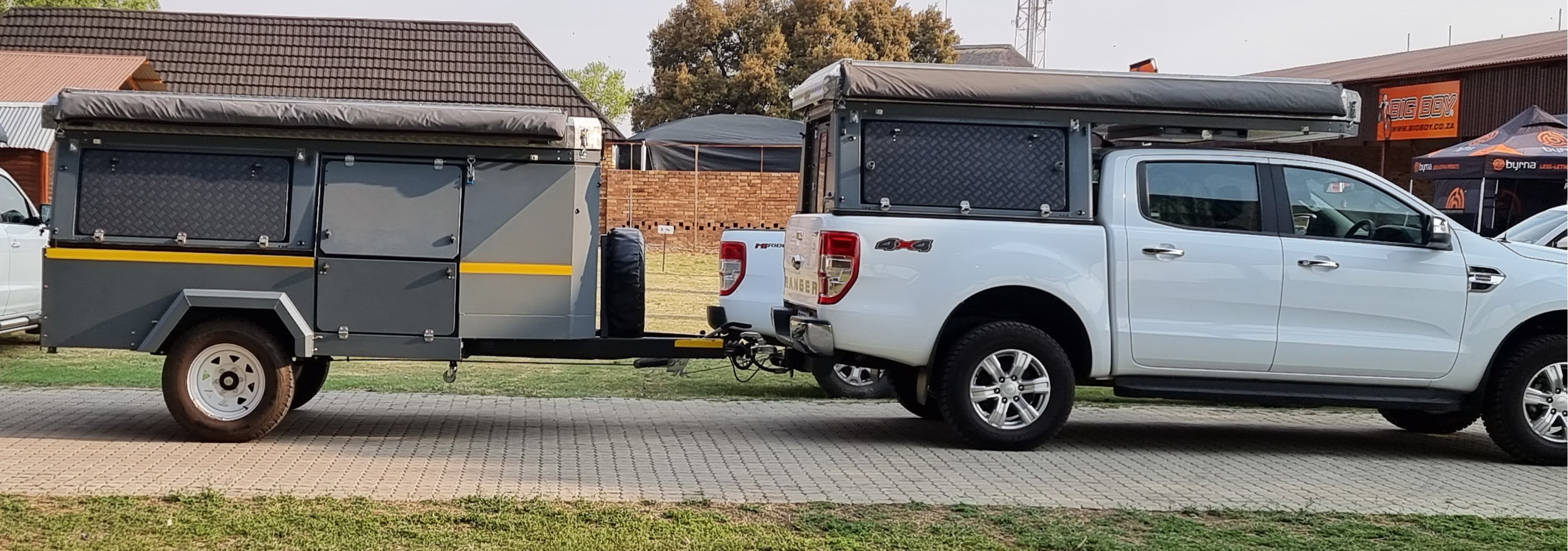
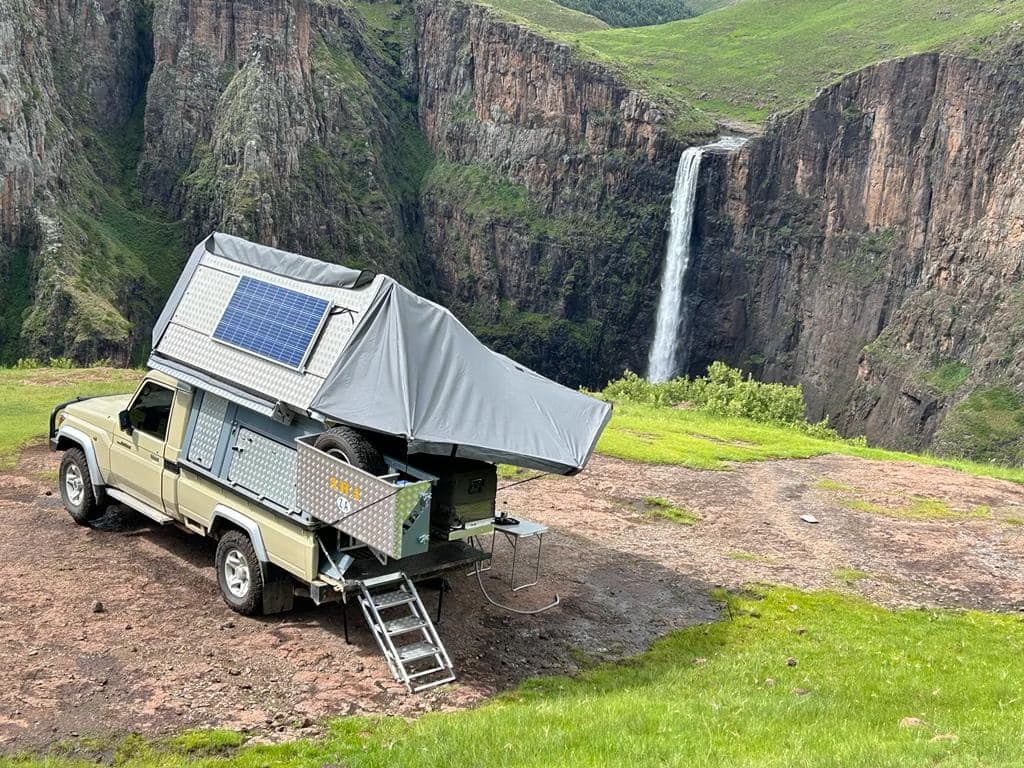
Most people who buy a bakkie camper assume they need solar. Other manufacturers reinforce this: they bundle a solar panel, an inverter, and a battery into the price and present the whole package as standard. Whether you need it or not.
The AHA Transformer works differently. Here is what the base electrical system actually does, and an honest answer to when, and whether, you need to add anything.
What you get at base
The Transformer connects to your bakkie's 12V system as standard. A Victron Battery Protector is included. It monitors the vehicle battery and cuts the connection before it can go flat, so you are never stranded with a dead bakkie. The water pump, internal and external lighting, and all 12V plug sockets run from this connection.
When you plug into shore power at a campsite, using the standard blue caravan plug, you have 220V AC available throughout the unit. Every plug socket works. Your fridge switches to mains. You charge everything from the campsite supply.
That is the base setup. No add-ons. No extras.
The realistic trip, and why it is enough
Consider a typical four-stop trip: three nights at campsites, one night bush camping along the route.
At the campsites, you are plugged into shore power. The fridge runs on 220V. Everything charges overnight.
While driving between stops, which accounts for more than half the time on most trips, the fridge runs on 12V directly from the alternator, keeping everything cold while you cover ground. The Victron Battery Protector watches the vehicle battery throughout.
At the bush camp, the fridge is already cold from the drive. You have 12V lighting inside and out. You cook on gas. USB devices charge from the bakkie battery while you sleep or while you drive the next morning. You wake up, make breakfast on gas, and move on to the next campsite.
No solar was involved at any point. No additional battery was needed. The base setup handled everything.
This covers the needs of most AHA owners. Many don't even do four stops. They drive to one campsite, stay for the weekend, and are connected to shore power from Friday afternoon to Sunday morning.
When you do need an upgrade
There are situations where the base setup is not enough, and it is worth being direct about them:
- You are touring Angola for six weeks with no shore power.
- You are travelling through the Richtersveld, deep Botswana, Namibia, or Zambia, weeks at a time with no electrical hookup in sight.
- You are camping at one of the rustic sites inside the Kruger National Park that have no electricity by design and allow no generators.
In these types of situations, a lithium battery, solar panel, and inverter are the right call. The AHA electrical panel is designed for exactly this: the solar and battery system is a modular add-on that slots directly into an existing space inside the panel. If you buy base now and decide in five years that you want to go fully off-grid, you come back and it gets fitted.
The honest position
Other manufacturers charge everyone for off-grid capability: R30 000 to R40 000 worth of solar, battery, MPPT, and inverter bundled into every unit, whether the buyer will ever use it or not. Most won't.
The AHA position is simpler: buy what you need. If the base setup covers 90% of your trips (and for most buyers, it does) there is no reason to pay for the other 10% upfront. If your camping evolves, the system evolves with you.
Watch it open, see the electrical panel, and ask any questions in person. Come and see it set up at the factory. No obligation.